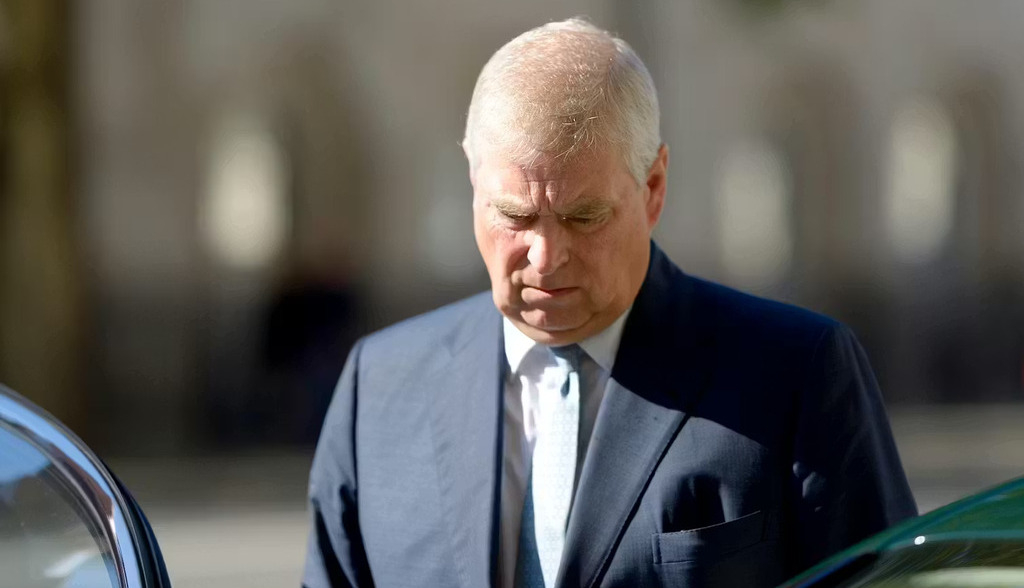
Es importante aclarar que el arresto no está relacionado con acusaciones de agresión sexual ni conducta inapropiada. En 2022, Mountbatten-Windsor llegó a un acuerdo con la difunta Virginia Giuffre por una suma no revelada que no incluía una admisión de responsabilidad.
Aparecer en los archivos de Epstein no es indicio de mala conducta. Mountbatten-Windsor ha negado previamente cualquier irregularidad en su relación con Epstein y ha rechazado cualquier sugerencia de que utilizara su tiempo como enviado comercial para favorecer sus propios intereses.
¿Cuál era el papel oficial de Mountbatten-Windsor y por qué lo perdió?
En 2001, el gobierno de Tony Blair nombró al entonces príncipe representante especial del Reino Unido para Comercio e Inversión. Según el gobierno de entonces, su cometido era «promocionar las empresas británicas a nivel internacional, promocionar el Reino Unido ante posibles inversores extranjeros y forjar relaciones que apoyaran los intereses comerciales del Reino Unido». No recibía salario, pero realizó cientos de viajes para promocionar las empresas británicas.
El gobierno suele enviar a miembros de la familia real a misiones internacionales para promover el comercio. Al negociar con otros países, en particular con aquellos que también son monarquías, enviar a una figura prominente como un miembro de la realeza puede ayudar a cerrar el trato. De hecho, el gobierno de entonces afirmó que la posición única del ex duque de York le otorgaba un acceso inigualable a miembros de familias reales, jefes de estado, ministros y directores ejecutivos de empresas.
No es inusual que miembros de la familia real sean enviados por el gobierno a misiones diplomáticas. Los miembros de la realeza suelen ser anfitriones de visitas de Estado y dirigir visitas similares al extranjero, y pueden ser enviados a encabezar delegaciones en misiones más específicas.
Sin embargo, Mountbatten-Windsor tenía un rol oficial como enviado comercial. Renunció a este cargo en 2011 tras informes sobre su amistad con Epstein, quien fue condenado por delitos sexuales en 2011.
¿Están los miembros de la realeza protegidos del procesamiento?
El monarca está protegido por la inmunidad soberana , un principio constitucional de amplio alcance que lo exime de toda responsabilidad penal y civil. Según el destacado constitucionalista del siglo XIX, Alfred Dicey, el monarca ni siquiera podía ser procesado por "dispararle al Primer Ministro en la cabeza". El Príncipe de Gales también goza de inmunidad como Duque de Cornualles, lo que lo protege del castigo por infringir diversas leyes.
La Ley de Inmunidad Estatal de 1978 , que otorga inmunidad al jefe de Estado, también se extiende a los "miembros de la familia que forman parte del hogar". Sin embargo, esta frase se ha interpretado de forma restrictiva, aplicándose a un círculo muy reducido de personas, y no parece aplicarse a los hijos del monarca en general. Por ejemplo, en 2002, la princesa Ana fue procesada (aunque no arrestada) por no controlar a sus perros en el Gran Parque de Windsor tras la mordedura de dos niños.
Sin embargo, a menudo se ha percibido que los miembros de la familia real se rigen por normas legales diferentes. En 2016, la Policía del Valle del Támesis fue criticada por grupos antimonárquicos por no procesar al entonces príncipe después de que la prensa afirmara que había atravesado las puertas del Gran Parque de Windsor con su coche . En 2019, la Fiscalía de la Corona se negó a procesar al príncipe Felipe por causar un accidente de tráfico en el que resultaron heridas dos personas.
La monarca tampoco puede ser obligada a declarar ante un tribunal. Por ejemplo, la fiscalía no pudo citar a la difunta reina a declarar en el juicio contra el exmayordomo de la princesa Diana, acusado de robarle sus joyas.
En respuesta al arresto de Mountbatten-Windsor, el rey declaró: «Lo que sigue ahora es un proceso completo, justo y adecuado mediante el cual este asunto se investigue de la manera adecuada y por las autoridades competentes. En esto, como ya he dicho, cuentan con nuestro apoyo y cooperación incondicionales. Permítanme decirlo claramente: la ley debe seguir su curso».
¿Cuándo fue la última vez que un miembro de la realeza fue arrestado?
Hay que remontarse bastante para encontrar la última vez que un miembro de la familia real británica fue arrestado. Esto ocurrió durante la Guerra Civil Inglesa, cuando Carlos I fue hecho prisionero por traición antes de ser declarado culpable y finalmente ejecutado en 1649.
Varios miembros de la realeza , incluida la princesa Ana, han cometido infracciones de tráfico, como exceso de velocidad. Sin embargo, este arresto convierte a Mountbatten-Windsor en el primer miembro de la familia real en ser arrestado en tiempos modernos, aunque cabe destacar que ya no es miembro de la realeza: fue despojado de todos sus títulos oficiales en octubre de 2025, cuando su amistad con Epstein se vio aún más cuestionada.
¿Qué límites tiene la policía a la hora de investigar las propiedades reales?
La inmunidad soberana también impide que la policía entre en propiedades reales privadas para investigar presuntos delitos sin permiso. En teoría, esto puede proteger a los miembros de la familia real de ser arrestados y procesados. La Ley de Bienes Culturales (Conflictos Armados) de 2017 también prohíbe a la policía registrar propiedades reales en busca de objetos robados o saqueados.
En 2007, dos aguiluchos pálidos fueron abatidos ilegalmente en la finca de Sandringham. Sin embargo, la policía de Norfolk primero tuvo que solicitar permiso a los funcionarios de Sandringham para entrar en la finca, momento en el que los cuerpos de las aves ya habían sido retirados. La policía interrogó al príncipe Harry, pero no presentó cargos.
Supuestamente otros incidentes han llevado a que Sandringham sea acusado de convertirse en un foco de delitos contra la vida silvestre , con al menos 18 casos denunciados de presuntos delitos contra la vida silvestre que tuvieron lugar entre 2003 y 2023, aunque solo uno resultó en un procesamiento.
Otro precedente legal de larga data es que nadie puede ser arrestado en presencia del monarca ni dentro de los límites de un palacio real. Se creía que esta norma podría proteger a otros miembros de la familia real y a sus empleados. Sin embargo, el arresto de Mountbatten-Windsor en Sandringham sugiere que este principio anticuado podría no ser válido hoy en día.
Why has Andrew Mountbatten-Windsor been arrested, and what legal protections do the royal family have?
Francesca Jackson,
Lancaster University
Andrew Mountbatten-Windsor has been arrested on suspicion of misconduct in public office. The arrest comes after the US government released files that appeared to indicate he had shared official information with financier and convicted child sex offender Jeffrey Epstein while serving as a trade envoy for the UK. But the police have not given details of exactly what they are investigating.
It is important to be clear that the arrest is not related to accusations of sexual assault or misconduct. In 2022, Mountbatten-Windsor reached a settlement with the late Virginia Giuffre for an undisclosed sum that did not include an admission of liability.
Being named in the Epstein files is not an indication of misconduct. Mountbatten-Windsor has previously denied any wrongdoing in his association with Epstein and and has previously rejected any suggestion he used his time as trade envoy to further his own interests.
What was Mountbatten-Windsor’s official role and why did he lose it?
In 2001, Tony Blair’s government made the then-prince the UK’s special representative for trade and investment. According to the government at the time, his remit was to “promote UK business internationally, market the UK to potential inward investors, and build relationships in support of UK business interests”. He did not receive a salary, but he did go on hundreds of trips to promote British businesses.
Members of the royal family are often deployed by the government on international missions to promote trade. When negotiating with other countries, particularly those which are also monarchies, sending a prominent figure like a royal may help seal the deal. Indeed, the then-government claimed that the former Duke of York’s “unique position gives him unrivalled access to members of royal families, heads of state, government ministers and chief executives of companies”.
It is not unusual for members of the royal family to be deployed by the government for diplomatic missions. Royals often host incoming state visits and lead similar visits abroad, and can be deployed to lead delegations on more specific missions.
However, Mountbatten-Windsor had an official role as trade envoy. He stepped down from this role in 2011 following reports about his friendship with Epstein, who was convicted of sex offences in 2011.
Are royals protected from prosecution?
The monarch is protected by sovereign immunity, a wide-ranging constitutional principle exempting him from all criminal and civil liability. According to the leading 19th century constitutionalist Alfred Dicey, the monarch could not even be prosecuted for “shooting the Prime Minister through the head”. The Prince of Wales also enjoys immunity as Duke of Cornwall, which protects him from punishment for breaking a range of laws.
The State Immunity Act 1978, which confers immunity on the head of state, also extends to “members of the family forming part of the household”. However, this phrase has been interpreted narrowly to apply to a very tight circle of people and does not appear to apply to the monarch’s children in general. For example, in 2002 Princess Anne was prosecuted (though not arrested) for failing to control her dogs in Windsor Great Park after they bit two children.
Nevertheless, there has often been a perception that members of the royal family are held to a different standard when it comes to the law. In 2016 Thames Valley Police were criticised by anti-monarchy groups for not prosecuting the then-prince after newspaper reports alleged he had driven his car through the gates of Windsor Great Park. In 2019 the Crown Prosecution Service declined to prosecute Prince Philip for causing a car crash which injured two people.
The monarch also cannot be compelled to give evidence in court. For example, prosecutors were unable to summon the late queen to give evidence in the trial of Princess Diana’s former butler, who was accused of stealing her jewellery.
In response to Mountbatten-Windsor’s arrest, the king said: “What now follows is the full, fair and proper process by which this issue is investigated in the appropriate manner and by the appropriate authorities. In this, as I have said before, they have our full and wholehearted support and co-operation. Let me state clearly: the law must take its course.”
When was the last time a royal was arrested?
You have to go back quite a long way to find the last time that a member of the British royal family was arrested. This was during the English civil war, when Charles I was taken prisoner for treason before being found guilty and ultimately executed in 1649.
A number of royals, including Princess Anne, have committed driving-related offences, including speeding. But this arrest makes Mountbatten-Windsor the first member of the royal family to be arrested in modern times, though it should be noted that he is no longer a royal – he was stripped of all his official titles in October 2025 as his friendship with Epstein came under even more scrutiny.
What limits do police have on investigating royal estates?
Sovereign immunity also prevents police from entering private royal estates to investigate alleged crimes without permission. This can, theoretically, protect members of the royal family from arrest and prosecution. The Cultural Property (Armed Conflicts) Act 2017 also bans police from searching royal estates for stolen or looted artefacts.
In 2007, two hen harriers were illegally shot at Sandringham estate. However, Norfolk Police first needed to ask Sandringham officials for permission to enter the estate, by which time the dead birds’ bodies had been removed. Police questioned Prince Harry, but did not bring charges.
Other incidents have allegedly led to Sandringham being accused of becoming a wildlife crime hotspot, with at least 18 reported cases of suspected wildlife offences taking place between 2003-23 – yet only one resulting in prosecution.
Another longstanding legal precedent is that no one may be arrested in the presence of the monarch or within the precincts of a royal palace. It was thought that this rule could protect other members of the royal family and royal employees. However, Mountbatten-Windsor’s arrest at Sandringham suggests that this antiquated principle may no longer hold true today.
Francesca Jackson, PhD candidate, Lancaster Law School, Lancaster University
Artículo publicado en The Conversation bajo licencia Creative Commons.